Canva is great until it isn't. After the last round of price increases, a lot of people (myself included) started asking whether they really need to pay for a tool they open a few times a month. If that's you, the good news is there are plenty of free Canva alternatives that handle most of what people actually use Canva for, from quick social graphics to logos, presentations, and print.
This is a hands-on rundown of the 10 best free Canva alternatives in 2026. Some are full Canva-style editors, some are open-source tools the design crowd swears by, and one (Orshot) adds an API so you can generate designs in bulk instead of one at a time. I've sorted them by what each one is genuinely good at, so you can skip straight to the job you're trying to get done.
Quick Comparison
| Tool | Starting Price | API / Automation | Open Source | AI Agent | Best For |
|---|---|---|---|---|---|
| GIMP | Free | Photo editing | |||
| Orshot | Free / $9 | Canva + Canva Autofill API Alternative | |||
| Figma | Free / $12 | UI/UX & teams | |||
| Inkscape | Free | Vector graphics | |||
| Adobe Express | Free / $10 | Adobe ecosystem | |||
| Pixlr | Free / $2.49 | Budget all-in-one | |||
| Snappa | Free / $15 | Social media | |||
| VistaCreate | Free | Print materials | |||
| BeFunky | Free | Photo & collage | |||
| Piktochart | Free | Infographics |
Why Users Are Switching from Canva
Most people don't quit Canva because they dislike it. They quit because something specific pushed them out. The same handful of complaints come up again and again in r/canva and r/freesoftware threads:
What's actually pushing people off Canva:
-
The price hikes. This is the number one trigger. Folks who open Canva two or three times a month don't want to pay roughly double for the privilege. One long-time Pro user summed it up: they only use it a few times a month and aren't about to pay double for a tool they barely touch, [ref] ↗
-
Forced per-seat Teams billing. The Teams plan that used to cover a small group for a flat fee now bills per person, and people report surprise charges and a confusing Pro-versus-Teams upgrade path, [ref] ↗
-
Lock-in and access worries. Sharing links, downloading finished work, even getting at your own files can hit a paywall right when you need them. A recurring fear in these threads is simple: "can I actually get my designs out if I leave?", [ref] ↗
-
No real API or automation. If you need to generate hundreds of designs from a spreadsheet, Canva's manual "Bulk Create" isn't built for it, and there's no proper REST API, [ref] ↗ or native hook into n8n, Zapier, or Make, [ref] ↗
-
Features creeping behind Pro. Handy things like the background remover are now Pro-only, so free users get nudged toward point tools like remove.bg instead.
So where do you go instead? Here are the ten free Canva alternatives I'd actually recommend, grouped loosely by the kind of work you're doing.
1. GIMP - The Powerhouse Open Source Alternative, but also old-school
Best for:
- Advanced users comfortable with complex interfaces
- Professional photo editing and retouching
- Users transitioning from expensive software
- Complex graphic design projects
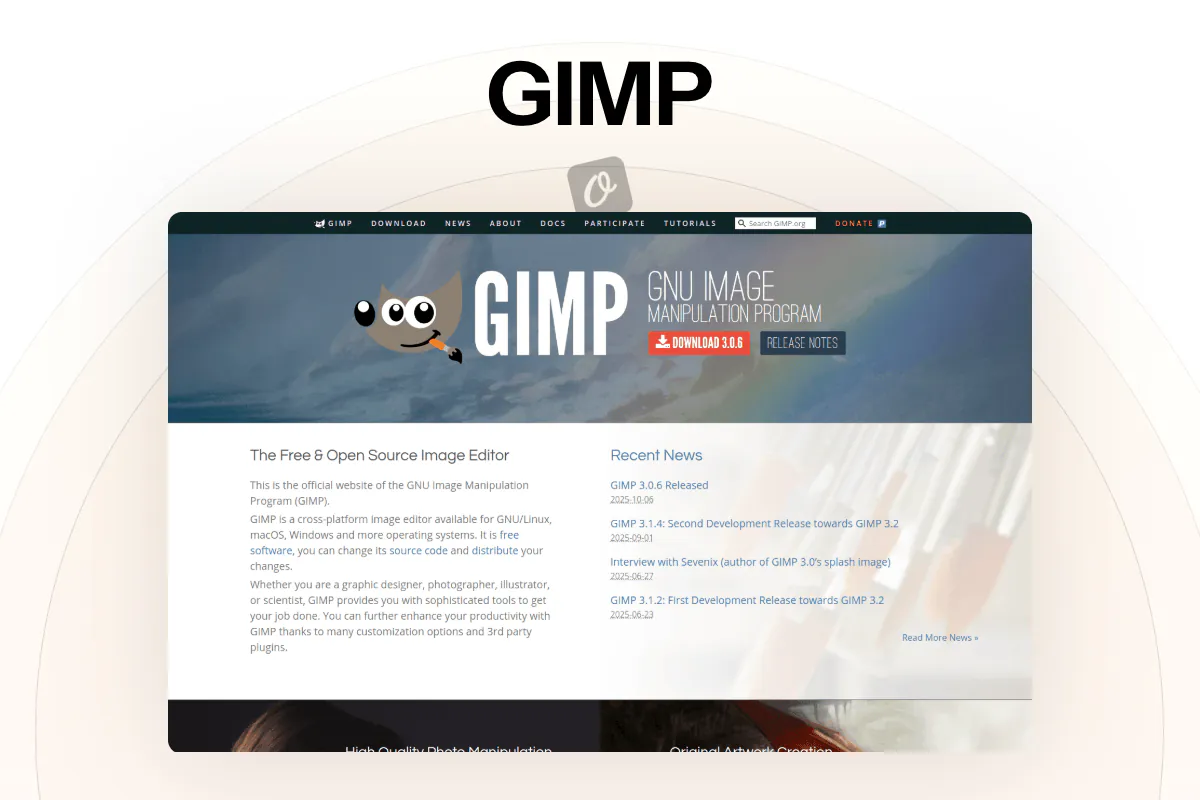
GIMP (GNU Image Manipulation Program) has been the go-to free Photoshop substitute for over two decades. To be clear, it's a photo editor, not a Canva-style template tool, and nobody will tell you the interface is friendly. But if you need serious image editing without a subscription, nothing free gets closer.
Key Features
- 01Professional photo editingAdvanced tools for retouching, color correction, and manipulation
- 02Layer-based editingComplex compositions with full layer support
- 03Plugin ecosystemExtensive third-party plugins and scripts
- 04Format supportWorks with virtually every image format including PSD files
- 05Customizable interfaceTailor the workspace to your workflow
- Completely free and open source
- Professional-grade features
- Active community and extensive tutorials
- Cross-platform compatibility (Windows, Mac, Linux)
- No subscription fees ever
- Steep learning curve for beginners
- Interface can feel dated compared to modern tools
- Limited template selection
- More complex than needed for simple tasks
AI Features:
GIMP has limited built-in AI features, though community plugins offer some AI-powered filters and enhancement tools for basic image processing tasks.
2. Orshot - Canva-like Editor with API Automation
This LinkedIn carousel was designed and generated in Orshot. Flip through it, or copy the template and make it your own:
Orshot is what you get when you combine Canva's editor with Canva's Autofill API, minus the Enterprise plan and the approval queue. You design a template in a familiar drag-and-drop editor, mark any element as dynamic, then autofill it with data and render unlimited variations through a single REST API. That covers both jobs at once: a Canva alternative when you just want to design, and a Canva Autofill API alternative when you need to generate designs at scale.
And you don't have to start from scratch. Bring your existing Canva designs with you. Paste a public Canva share link below and see your design as an API-ready Orshot template, right here:
In Canva: Share → “Public View Link” → copy the link.
Read more about how the Canva import works, and once your designs are in, you can even automate publishing to your social accounts via Orshot
Key Features
- 01Visual Drag-and-Drop EditorCanva-like interface with text, images, shapes, and rich formatting options
- 02Template ParameterizationMake any element dynamic: text, images, colors, and styling properties
- 03REST API GenerationGenerate thousands of design variations with simple API calls
- 04Multi-format OutputExport as PNG, JPG, AVIF, PDF, MP4, WebM, or GIF
- 05Video GenerationCreate videos with per-layer trim, mute, and loop controls via API
- 06Integration-ReadyWorks with n8n, Zapier, Make, and custom applications
- 07Works With AI AgentsA hosted MCP server lets Claude, Cursor, ChatGPT and 7 more render your templates on request
- 08Publish to 10+ Socials SitesSupports posting to Instagram, LinkedIn etc. via API
How Orshot Works:
- Design in Studio: Use the visual editor to create your template with text, images, and shapes
- Set Parameters: Mark elements as dynamic (e.g.,
{{name}},{{company}} - Generate via API: Send data through REST API to create personalized versions
// Example: Generate a certificate with custom data
await fetch("https://api.orshot.com/v1/studio/render", {
  method: "POST",
  headers: {
    "Content-Type": "application/json",
    Authorization: "Bearer YOUR_API_KEY",
  },
  body: JSON.stringify({
    templateId: 12345,
    modifications: {
      recipientName: "John Smith",
      courseName: "Advanced JavaScript",
      completionDate: "October 2025",
      certificateColor: "#4F46E5",
    },
    response: {
      type: "base64",
      format: "png",
    },
  }),
});
Pricing: Free tier available with API access, paid plans start at $9/month
AI Features:
The AI here isn't a text-to-image button. It's two separate things: an agent that builds templates for you, and an MCP server that lets your own AI agent drive Orshot.
- AI Design Agent — describe the template you want and it builds an API-ready one in Studio, with the dynamic fields already parameterized
- Remote MCP server — connect Orshot to Claude, Cursor, ChatGPT, Codex and six more clients, then have them generate templates and set up your workflows for you. No local install, OAuth per workspace
- Agent skill — a skill file teaches your agent the API, the
page1@prefix for carousels, and Smart Resize, so it stops guessing at the request shape
Here's the MCP setup and a template being generated from a prompt, end to end:
This is the part none of the other tools on this list really do. Figma ships an MCP server, but it's aimed at design-to-code handoff, not at generating finished assets. If you want to say "make me 200 branded certificates from this spreadsheet" and get files back, that's the gap Orshot fills.
3. Figma - Collaborative Design Platform
Best for:
- UI/UX designers and product teams
- Teams requiring real-time collaboration
- Web and app design projects
- Design system creation and management
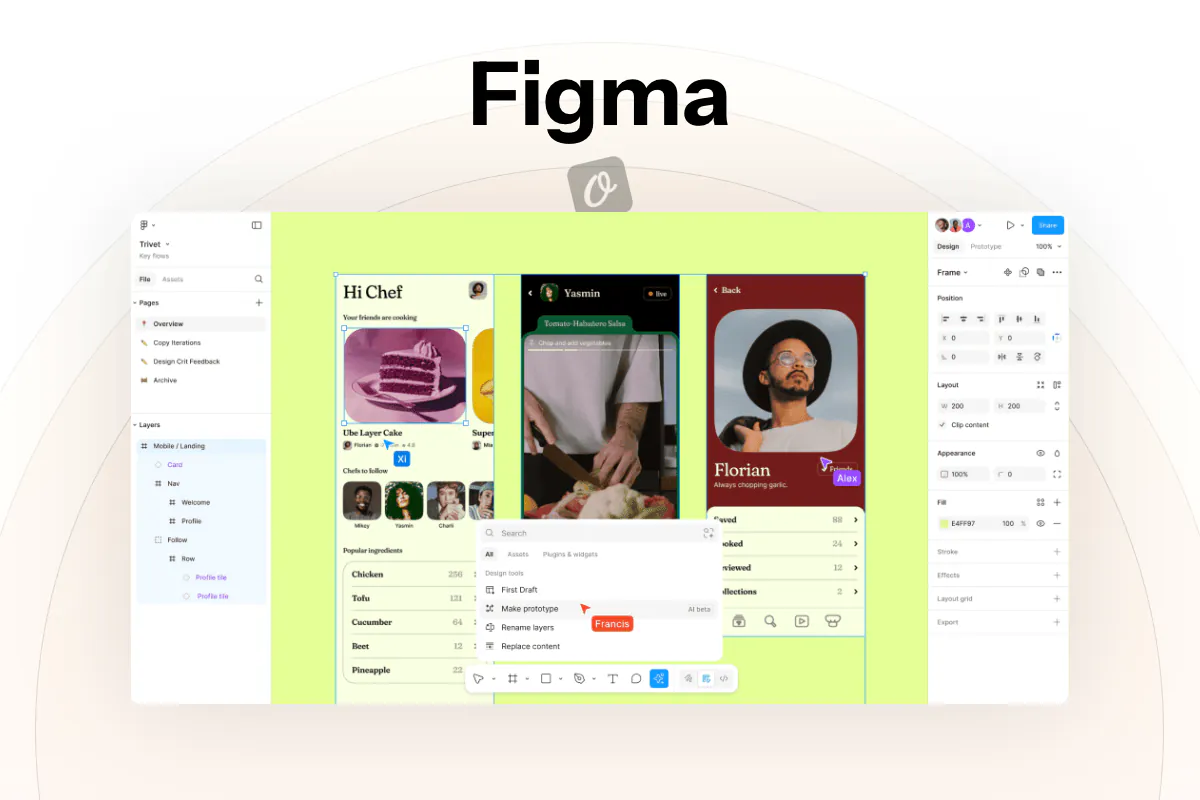
Figma is where most product teams design these days, and its free tier is genuinely generous. Fair warning, redditors will tell you it's overkill for a quick Instagram post (one called it "using a screwdriver to hammer a nail"). But for UI, web work, and anything collaborative, it's hard to beat for free.
Key Features
- 01Real-time collaborationMultiple designers can work simultaneously
- 02Component systemsReusable design elements and design systems
- 03Prototyping toolsInteractive mockups and user flow testing
- 04Version controlTrack changes and revert to previous versions
- 05Plugin marketplaceThousands of community-created plugins
What sets it apart:
- Browser-based: No software installation required
- Team features: Comments, feedback, and approval workflows
- Developer handoff: Generate code snippets and design specs automatically
- Free tier: Robust functionality without cost for small teams
AI Features:
Figma offers AI-powered features like auto-layout suggestions, design system recommendations, and smart component detection through various plugins and beta features.
Pricing: Free for up to 3 projects, paid plans from $12/month per editor
4. Inkscape - Vector Graphics Specialist
Best for:
- Logo design and brand identity work
- Vector illustrations and artwork
- Scalable graphics for web and print
- SVG graphics for websites
Inkscape is the free, open-source answer to Illustrator. If you're making logos or anything that needs to scale cleanly, this is the one. It works nothing like Canva and takes some getting used to, but you'll own clean SVGs at the end of it.
Key Features
- 01SVG-nativeBuilt around the SVG standard for web-compatible graphics
- 02Bezier toolsProfessional path editing and manipulation
- 03Text supportAdvanced typography tools and text-along-path features
- 04Object manipulationClone, align, and distribute tools for precise layouts
- 05ExtensionsPython-based plugins for specialized functions
- Free and open source with no limitations
- Excellent for logos and scalable graphics
- Professional vector editing tools
- Strong community support
- Regular updates and improvements
- Limited bitmap editing capabilities
- Smaller template ecosystem
- Learning curve for vector graphics newcomers
AI Features:
Inkscape currently has minimal AI integration, though some community extensions provide basic automated tracing and path optimization features.
5. Adobe Express
Best for:
- Users already in the Adobe ecosystem
- Quick design creation with premium assets
- Professional brand consistency
- Teams needing Adobe integration
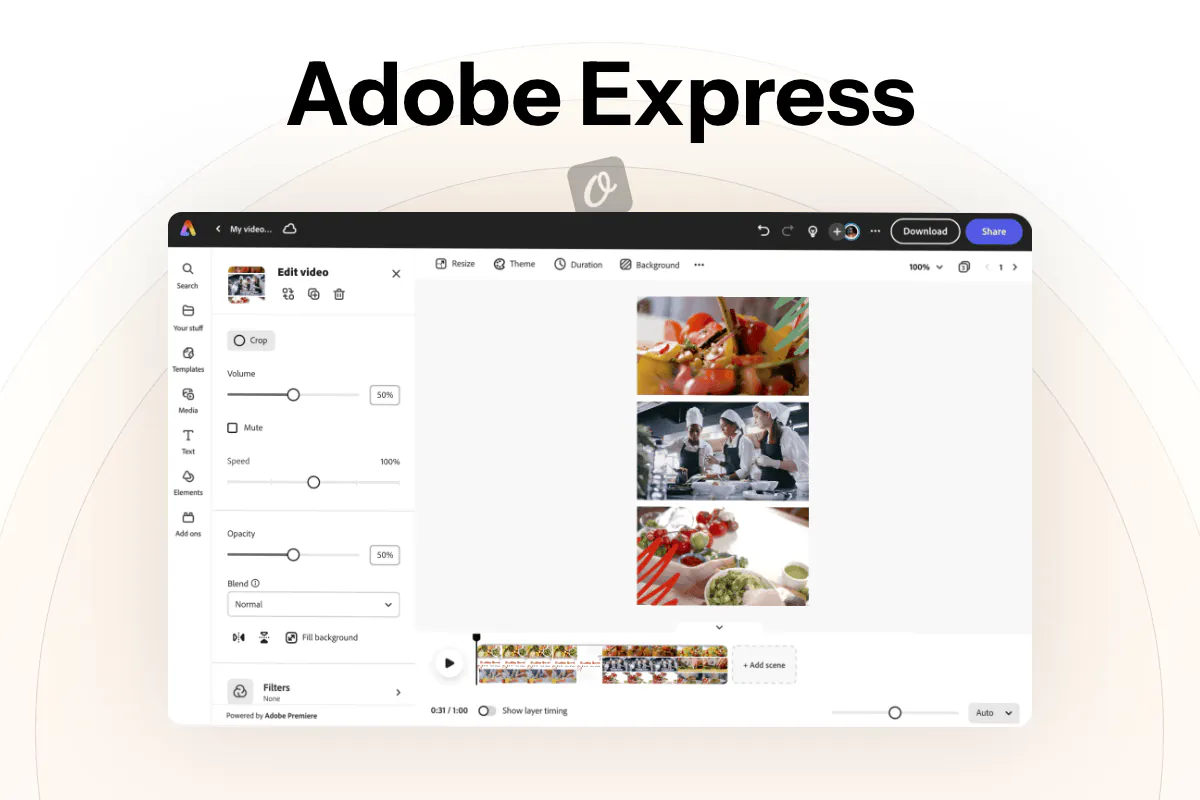
Adobe Express (formerly Adobe Spark) is probably the closest free Canva-like on this list, and it's the tool redditors name most often when they want a near drop-in swap. The free plan leans on Adobe Stock assets and Firefly AI.
Key Features
- 01Adobe integrationSeamless access to Adobe Stock and Creative Cloud assets
- 02AI-powered toolsFirefly integration for AI-generated content
- 03Brand managementUpload logos, fonts, and maintain brand consistency
- 04Quick actionsOne-click background removal and image enhancement
- 05Multi-format exportOptimized exports for different platforms
Why consider it:
- Quality templates: Professionally designed starting points
- Adobe ecosystem: If you use other Adobe tools, integration is seamless
- AI features: Latest generative AI capabilities built-in
- Mobile apps: Full-featured iOS and Android applications
AI Features:
Adobe Express integrates Adobe Firefly for AI image generation, text effects, and background removal, plus smart resize and auto-animation features.
Pricing: Free plan available, premium plans from $9.99/month
6. Pixlr - Budget-Friendly Alternative
Best for:
- Casual designers on a budget
- Users needing both photo editing and templates
- Small businesses with limited design resources
- Beginners looking for an all-in-one solution
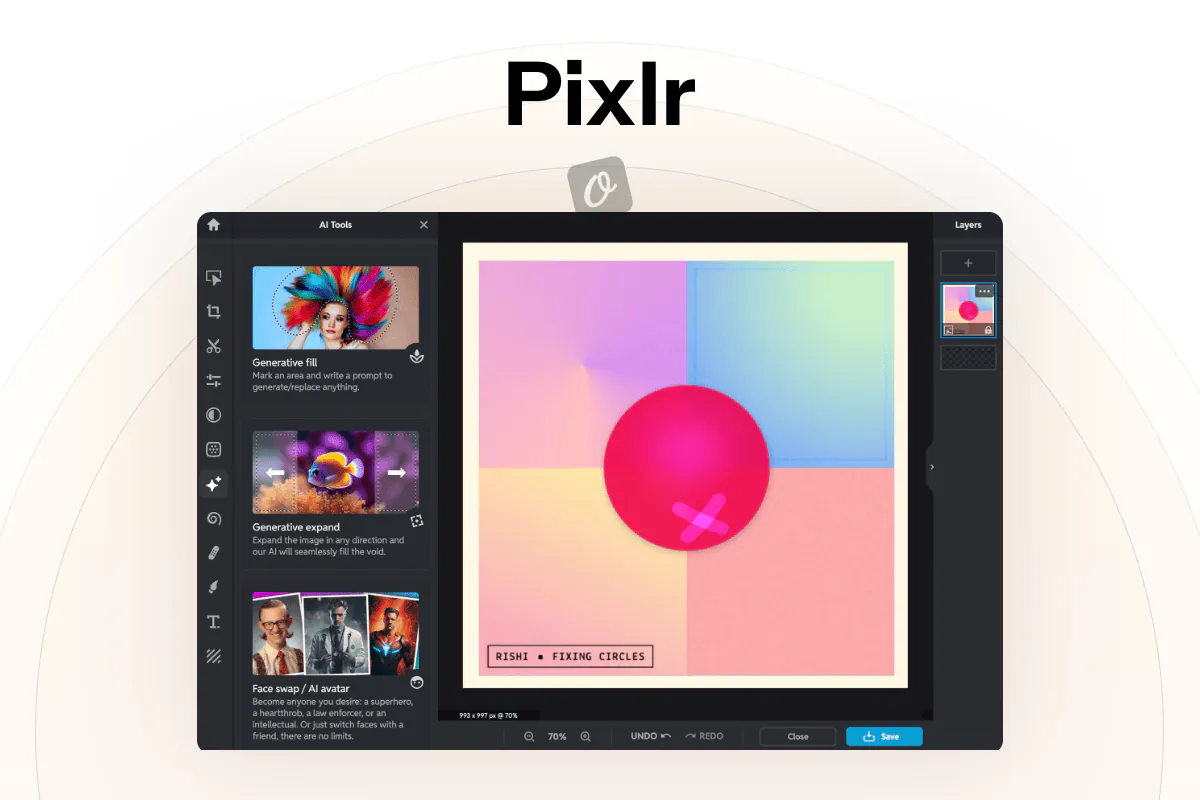
Pixlr quietly does a lot: photo editing, a Canva-style template editor, and AI tools, all with a genuinely usable free tier. It comes up often when people want one cheap app that covers both photos and graphics instead of juggling two.
Key Features
- 01Multiple appsPhoto Editor, Designer, and Express for different needs
- 02AI-powered featuresBackground removal, image enhancement, and filters
- 03Template libraryThousands of templates for various purposes
- 04Batch processingEdit multiple images simultaneously
- 05Cloud storageAccess your work from anywhere
Value proposition:
- Affordable pricing: Starting at just $2.49/month
- All-in-one solution: Photo editing plus design templates
- User-friendly: Intuitive interface for beginners
- Mobile compatibility: Work on desktop or mobile devices
AI Features:
Pixlr includes AI-powered background removal, image enhancement, style transfer filters, and an AI image generator with monthly credit limits.
7. Snappa - Simplicity First
Best for:
- Occasional designers with infrequent needs
- Users who prefer transparent pricing
- Social media content creators
- Simple design tasks without complexity
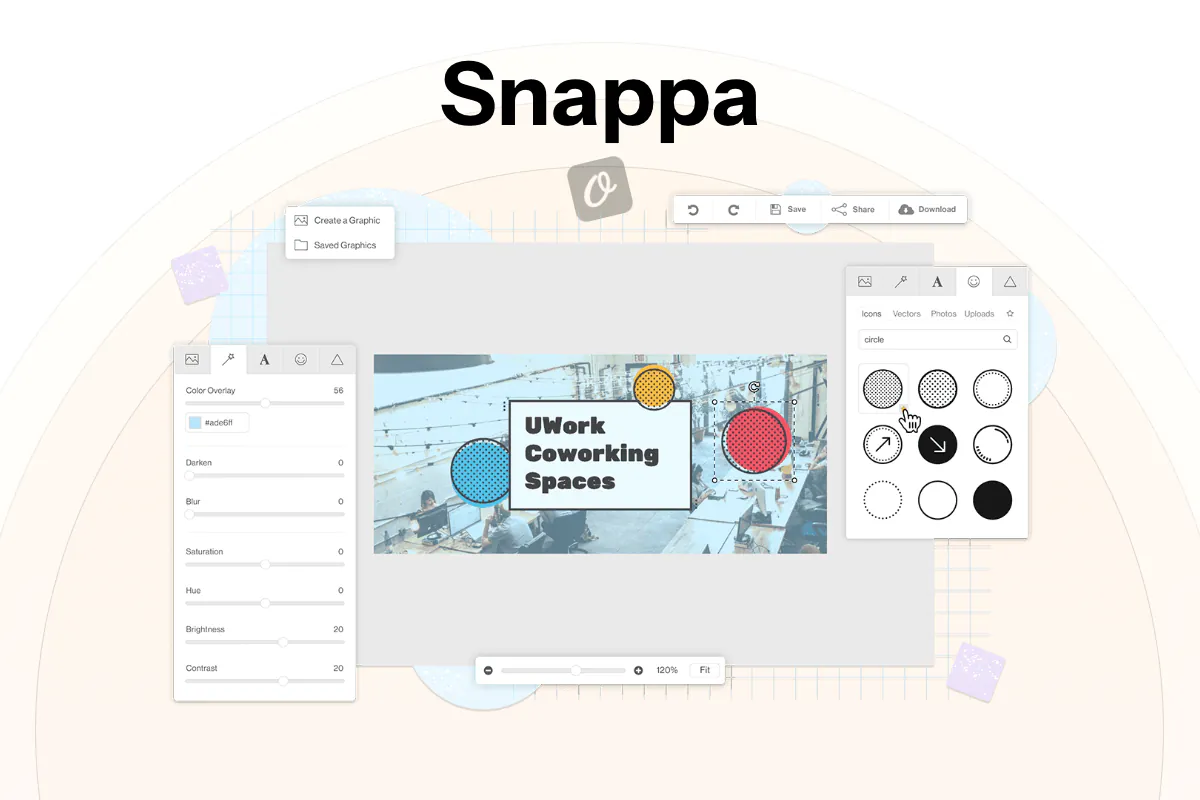
Snappa keeps things refreshingly simple. Every feature is available on the free plan; you're just capped on how many downloads you get per month. If your design needs are occasional, that trade is easy to live with.
Key Features
- 01No feature restrictionsAll tools available on free plan
- 02Social media focusPre-sized templates for every platform
- 03Background removalOne-click AI-powered background removal
- 04Graphics libraryThousands of photos, graphics, and fonts
- 05Simple workflowStreamlined design process
Unique approach:
- Transparent freemium: No locked features, only usage limits
- Quick results: Optimized for fast design creation
- Platform-specific: Templates designed for specific social media dimensions
AI Features:
Snappa offers basic AI-powered background removal but lacks advanced AI features like image generation or smart design suggestions.
Pricing: Free with 3 downloads/month, Pro at $15/month for unlimited usage
8. VistaCreate - Print-Focused Design
Best for:
- Small businesses needing print materials
- Users requiring seamless printing integration
- Marketing teams creating offline campaigns
- Companies wanting design-to-print workflow
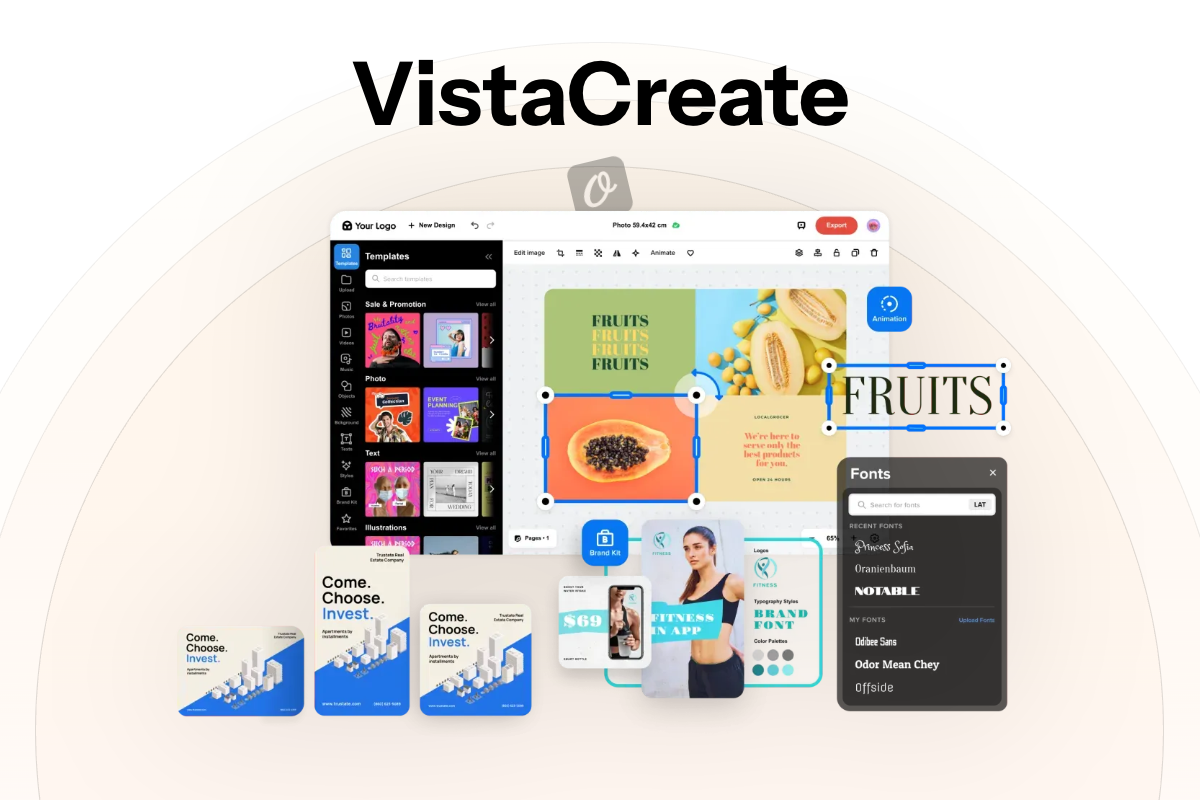
VistaCreate (formerly Crello) is backed by VistaPrint, so it really shines when your design needs to end up on actual paper: business cards, flyers, posters, and the like.
Key Features
- 01Print integrationDirect connection to VistaPrint's printing services
- 02Animation toolsCreate animated social media posts and ads
- 03Brand kitMaintain consistent branding across materials
- 04Video templatesShort video creation for social media
- 05Collaboration toolsTeam features for feedback and approval
Print advantage:
- Print-ready templates: Designs optimized for physical printing
- Material variety: Business cards, flyers, posters, and merchandise
- Quality assurance: Professional printing standards built-in
AI Features:
VistaCreate includes AI background removal, image upscaling, and basic AI-powered design suggestions for layout optimization.
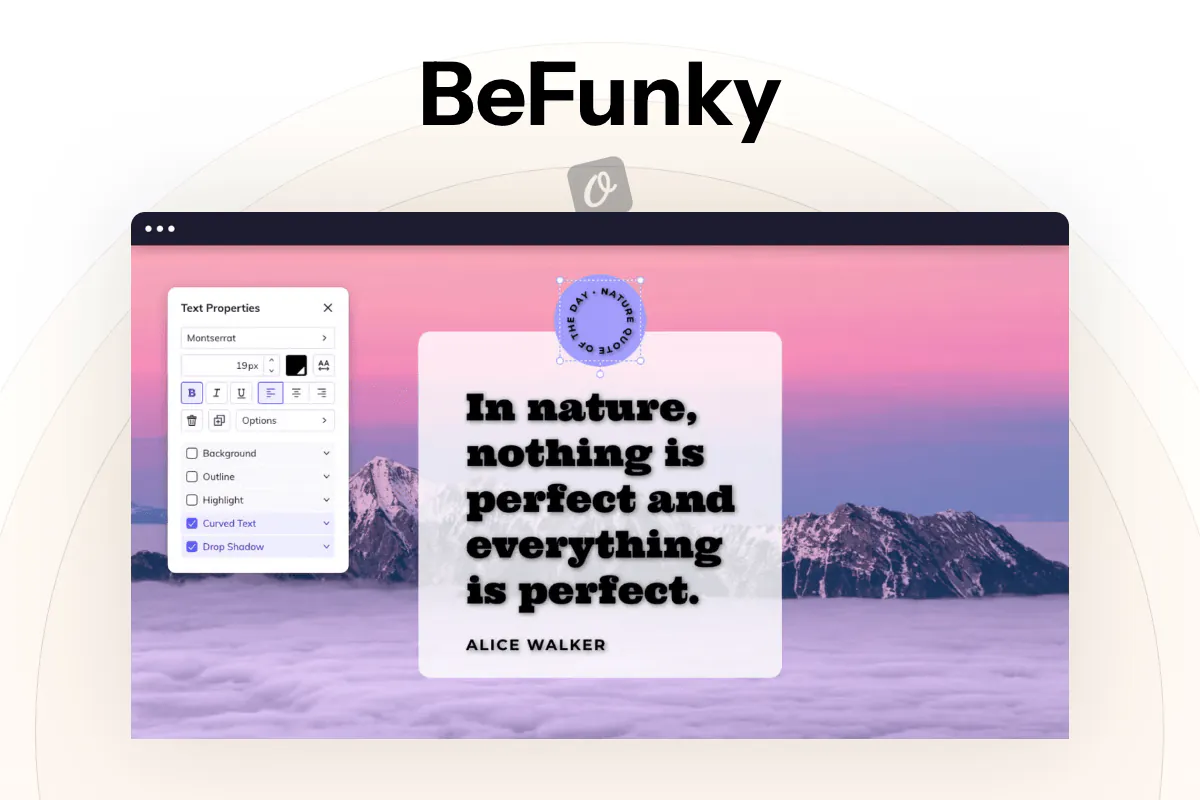
9. BeFunky - Photo-Centric Design
Best for:
- Photography enthusiasts and professionals
- Users needing advanced photo editing
- Collage creators and scrapbook designers
- Social media content with heavy photo focus
BeFunky sits somewhere between a photo editor and a design tool. If your work is photo-heavy (collages, photo-led social posts), it handles that better than most template-first apps.
Key Features
- 01Photo editorProfessional-grade photo editing tools
- 02Collage makerAdvanced collage creation with smart layouts
- 03Artistic effectsAI-powered filters and style transfers
- 04Background replacementSophisticated background editing
- 05Batch processingApply effects to multiple photos
Photo focus:
- Advanced editing: More powerful photo tools than typical design platforms
- Creative filters: Unique artistic effects and enhancements
- Collage specialist: Industry-leading collage creation tools
AI Features:
BeFunky provides AI-powered artistic filters, style transfers, background removal, and smart photo enhancement tools for automatic image improvement.
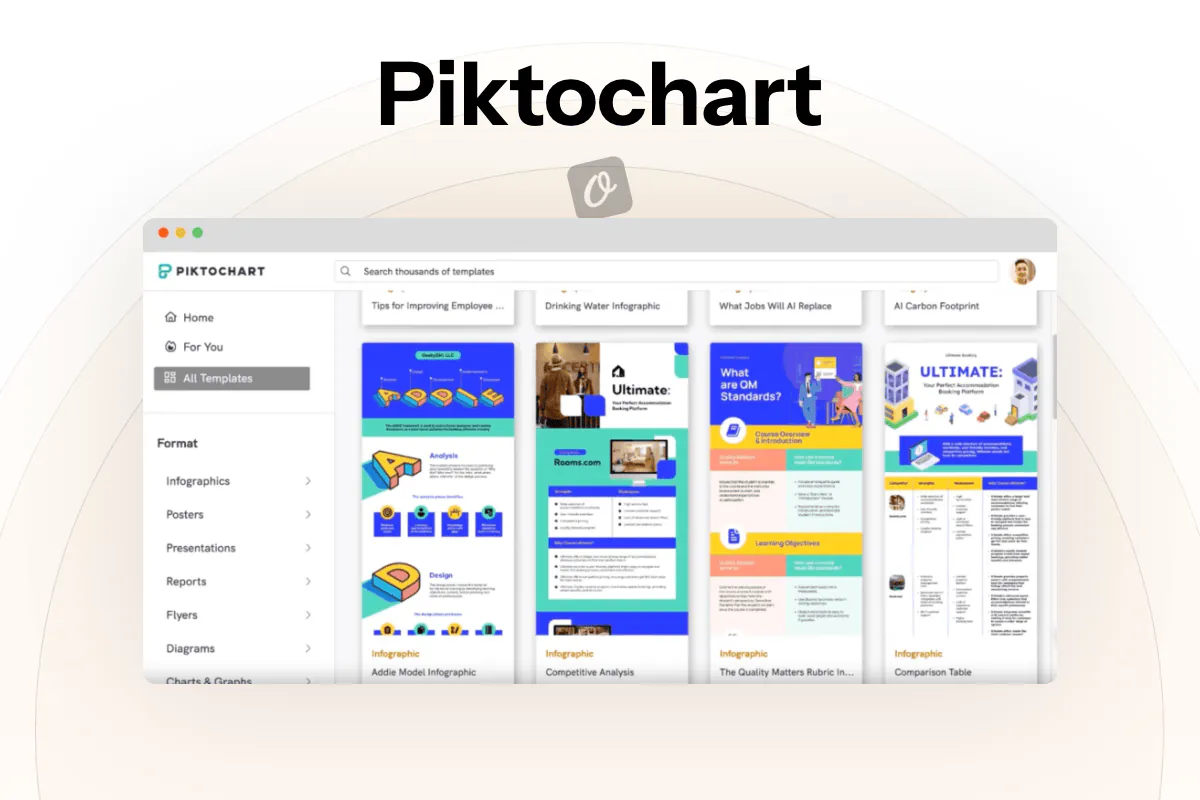
10. Piktochart - Data Visualization Expert
Best for:
- Data analysts and researchers
- Professionals creating infographics
- Educational content creators
- Business presentation designers
Piktochart is the one to reach for when you're turning data into something people will actually read: infographics, reports, and charts. One redditor mentioned switching from Canva to Piktochart purely for its AI.
Key Features
- 01Infographic templatesProfessionally designed data visualization layouts
- 02Chart toolsInteractive charts and graphs
- 03Map visualizationsGeographic data representation
- 04Presentation modeCreate slide-based presentations
- 05Data importDirect integration with spreadsheets and databases
Data strength:
- Visualization focus: Purpose-built for data storytelling
- Professional templates: Business-ready infographic designs
- Interactive elements: Engaging data presentations
AI Features:
Piktochart offers limited AI capabilities, primarily focusing on smart chart recommendations based on data types and automated color scheme suggestions.
How to Choose the Right Canva Alternative
For Marketers, Agencies & Small Teams:
Choose Orshot if you need to generate high volumes of personalized images and PDFs from templates. Perfect for marketing teams creating hundreds of social media posts with client branding, agencies producing custom certificates for multiple clients, or small teams generating personalized product mockups at scale, all without manual work.
For Professional Design Work:
Choose GIMP or Inkscape if you need powerful editing capabilities without subscription costs. GIMP for photo manipulation, Inkscape for vector graphics.
For Team Collaboration:
Choose Figma if your team needs to work together on designs in real-time, especially for web and app interfaces.
For Budget-Conscious Users:
Choose Pixlr or Snappa for cheap, capable options that still cover the basics without a subscription.
For Specific Use Cases:
- Print materials: VistaCreate
- Photo-heavy designs: BeFunky
- Data visualization: Piktochart
- Adobe ecosystem users: Adobe Express
Frequently Asked Questions
Is there a completely free alternative to Canva?
Is there a Canva Autofill API alternative?
What's the best free Canva alternative?
Is there an open-source Canva alternative?
What about Affinity now that Canva owns it?
Will I get a watermark on the free plan?
Is there an AI alternative to Canva?
Is Canva still worth paying for?
Conclusion
Look, Canva is genuinely great. There's a reason millions of people use it, and for sheer ease of use it's hard to beat. But if the price jump pushed you out, or you've hit one paywall too many, you've got real options.
Maybe you want API automation like BannerBear offers, or you're tired of subscription fees and prefer free tools like GIMP
The truth is, there's no single "best" design tool. It all depends on what you're actually trying to do and how much you want to spend. Try a couple from this list and see what clicks for you