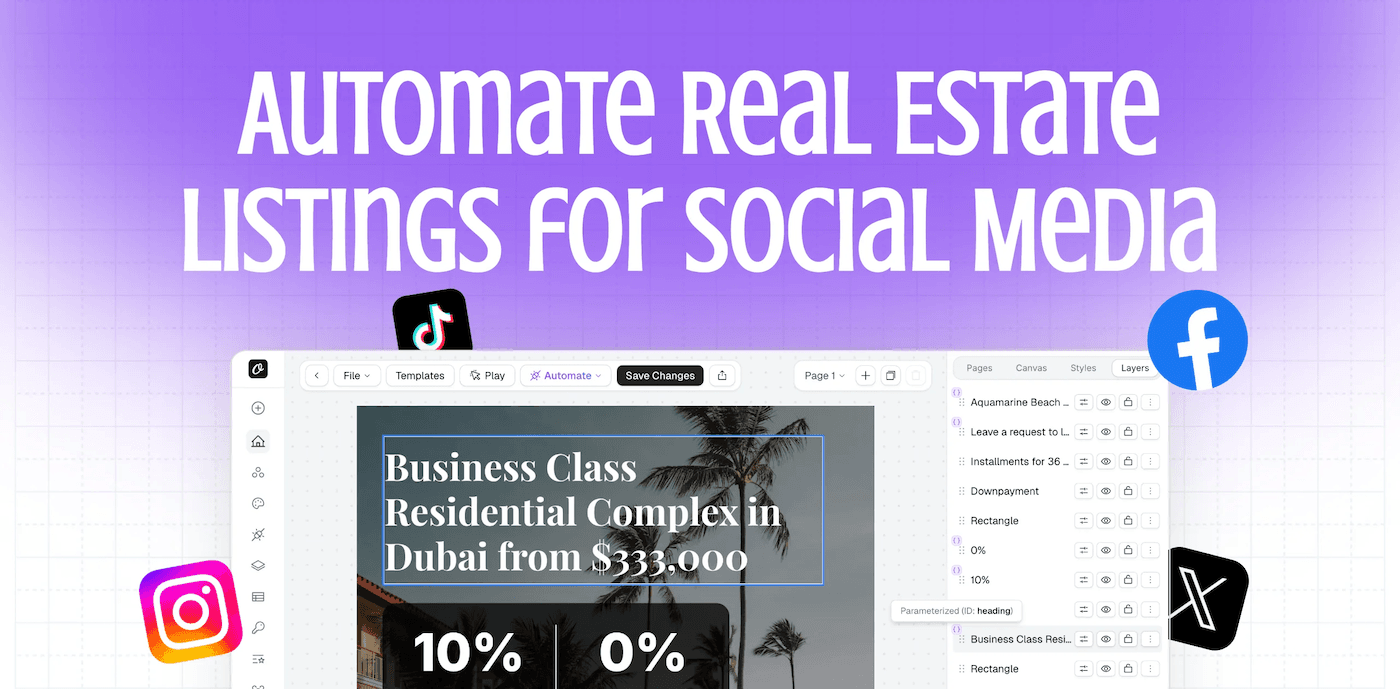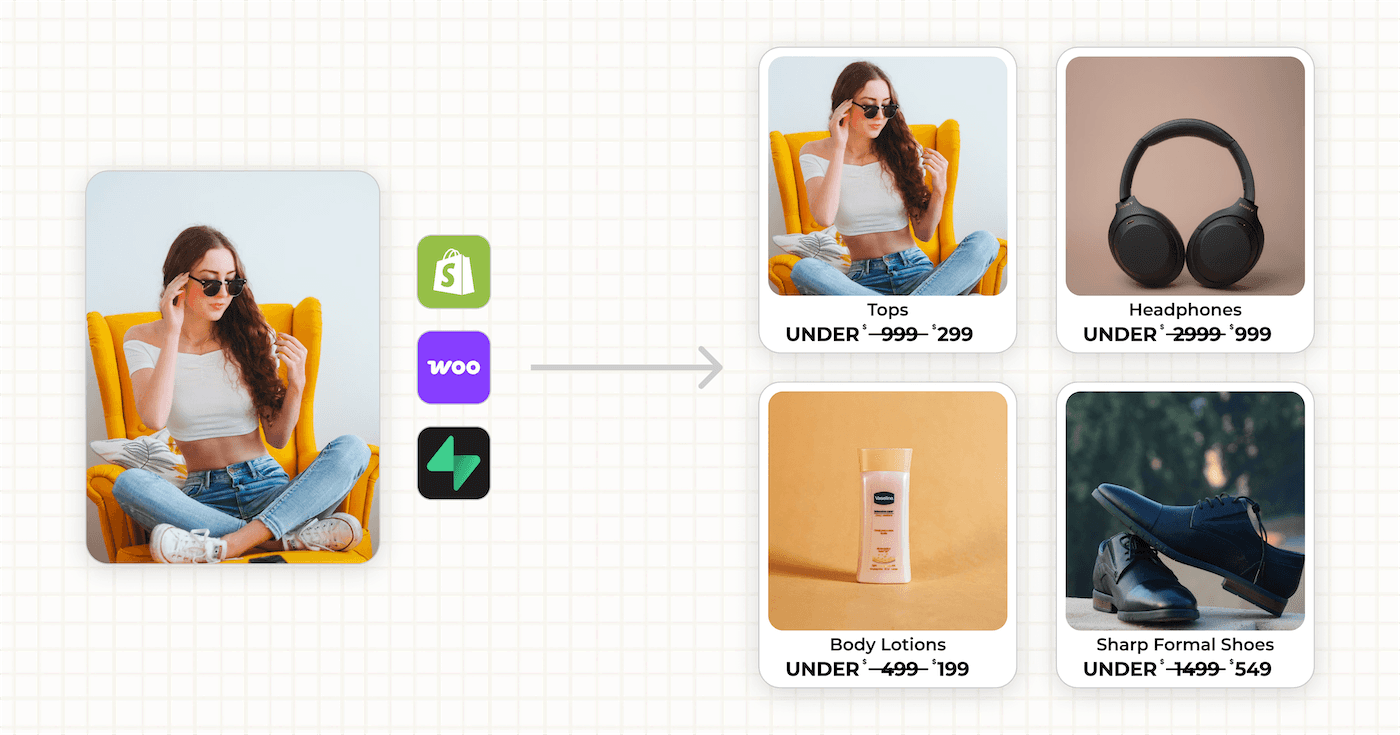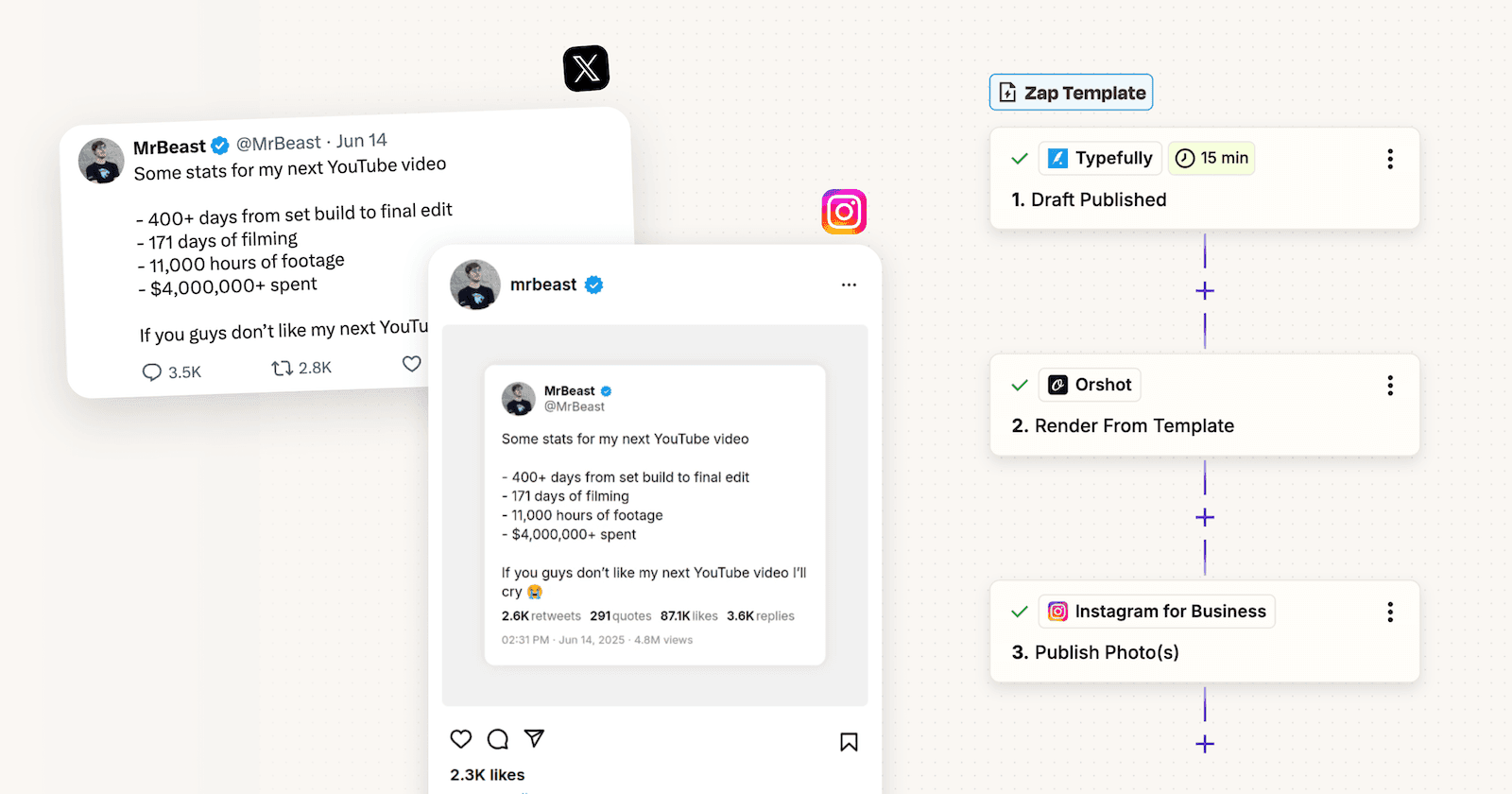
The retail advertising game has changed. You can't manually design hundreds of product ads anymore—not when you need to launch campaigns across multiple products, platforms, and variations daily
Here's how to automate retail ad generation without touching Photoshop or hiring a designer for every update
The Problem with Manual Ad Creation
Let's say you're running a retail brand with 50 products. Each product needs:
- Multiple ad sizes (Instagram story, feed post, Facebook ad, Google display)
- Seasonal variations (Black Friday, Christmas, Summer Sale)
- A/B testing versions (different headlines, colors, CTAs)
That's 50 × 4 × 3 × 2 = 1,200 unique ads. Manually creating these would take weeks and cost thousands in design time
There's a better way
Turn One Template into Thousands of Ads
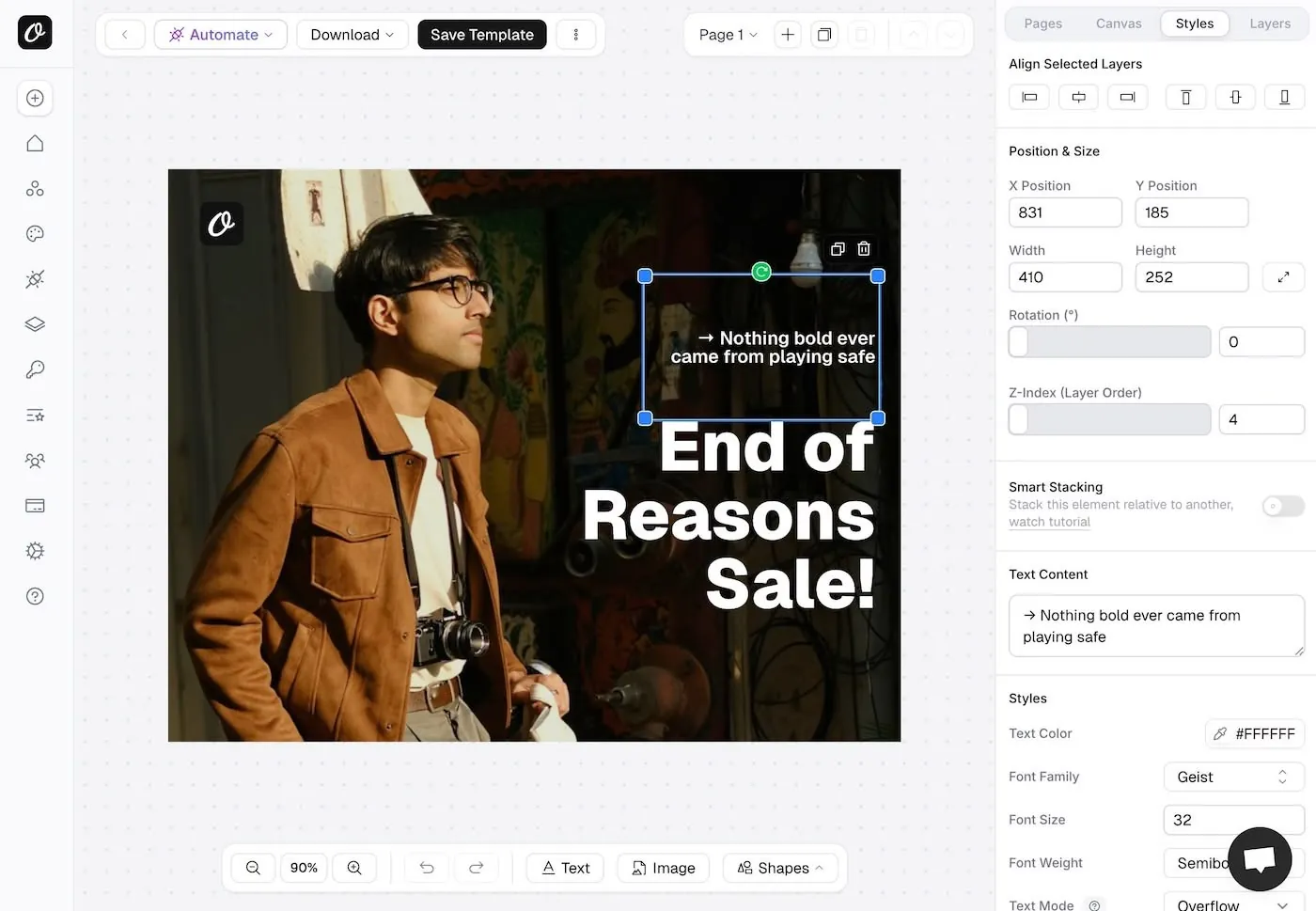
Preview this ad ↗
The core concept: Design once, generate infinitely
Instead of creating individual ads, you create one template and use automation to generate variations. Here's how it works with Orshot:
Step 1: Choose or Create a Retail Template
Start with pre-designed templates built specifically for retail:
- Browse retail-specific templates: Orshot Retail Templates
- Explore ad templates: Orshot Ad Templates
Or create your own from scratch using Orshot Studio (the visual template editor). If you're starting from existing designs in Canva or other tools, check out free design alternatives that can be imported directly into Orshot for automation.
- Build custom templates: Orshot Studio
- Drag-and-drop interface
- Add dynamic text fields, images, colors
- Design once, use forever
Step 2: Connect Your Product Data
Once you have a template, connect it to your product catalog. Each template becomes an API endpoint that accepts data inputs
Example: You have a retail template with these dynamic fields:
- Product image
- Product name
- Price
- Discount percentage
- Background color
Instead of manually editing each field, you pass data through the API:
{
  "product_image": "https://yourstore.com/images/shoe-1.jpg",
  "product_name": "Running Shoes Pro",
  "price": "$129.99",
  "price.fontSize": "120px",
  "discount": "30% OFF",
  "discount.fontWeight": "bold",
  "bg_color": "#FF5733"
}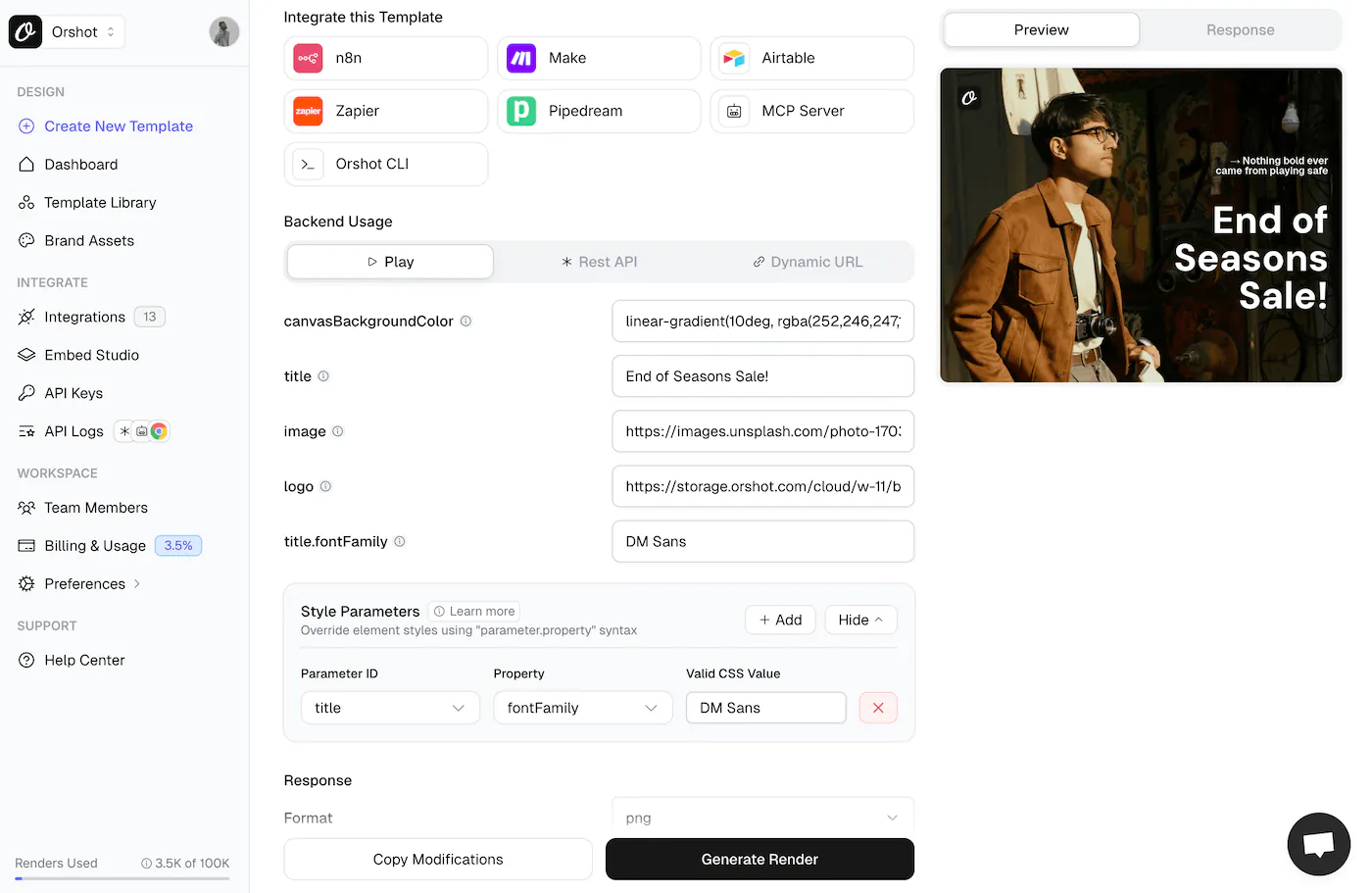
Orshot generates the ad image automatically. Change the data, get a different ad instantly
Learn more: Image Generation API
Step 3: Automate with No-Code Tools
Don't want to deal with APIs? Use no-code automation platforms:
Available integrations:
- Zapier
- Make (Integromat)
- n8n
- Pipedream
- And more
Explore integrations: Orshot Integrations
Example workflow:
- New product added to Shopify → Trigger automation
- Fetch product data (name, image, price)
- Send data to Orshot template
- Generated ad saved to Google Drive
- Ad posted to social media via Orshot Social Publish or Facebook Ads Manager
Zero manual work. Your ads generate and publish automatically
You don't even need Zapier or Make for this. Orshot has this automation built in as a ready-made workflow: it pulls sale data from Google Sheets on a schedule, renders the discount banners, and saves them to Google Drive. One click adds it to your workspace.
Dynamic URLs: The Simplest Way to Generate Ads
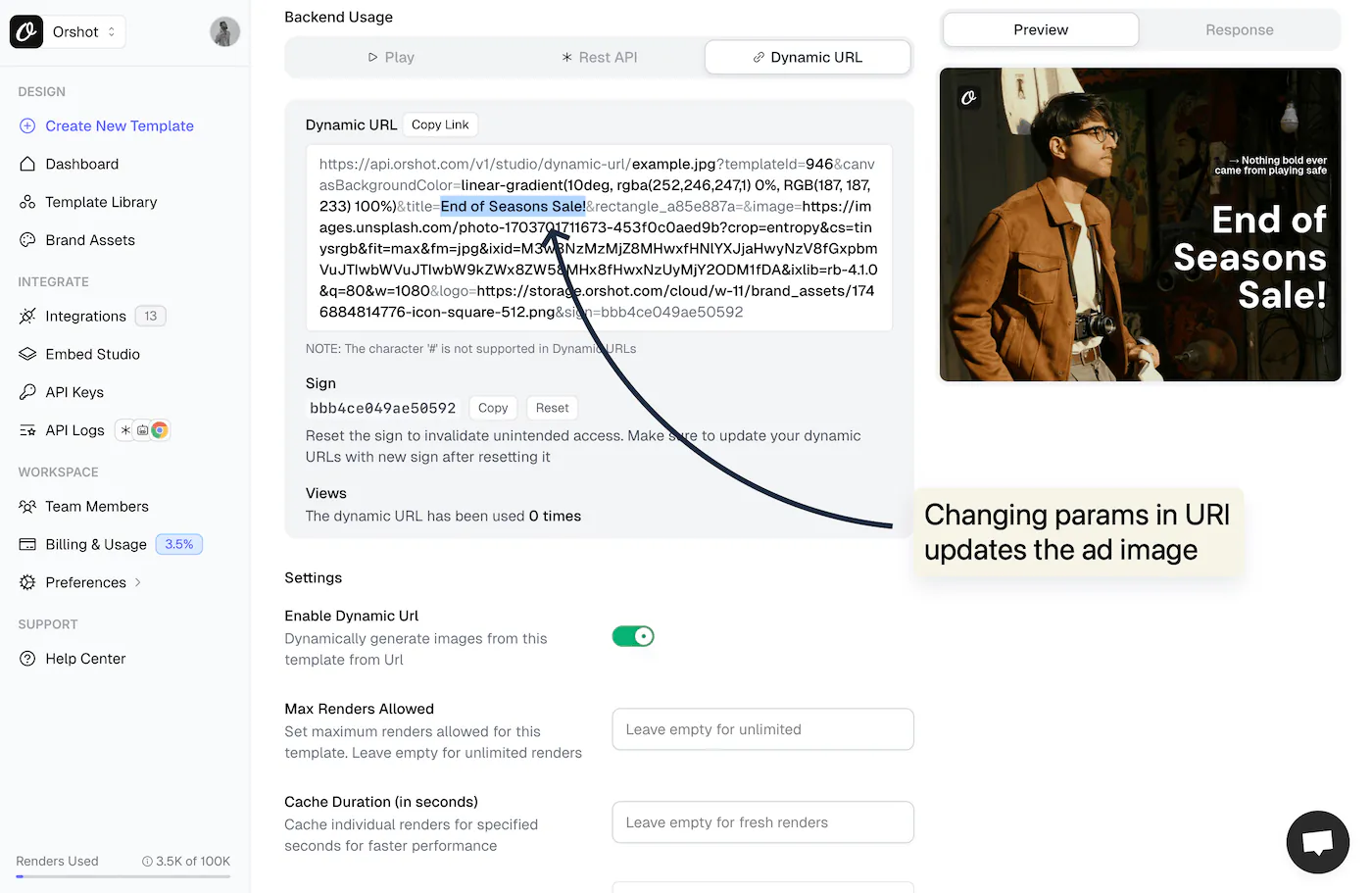
If you want even simpler automation, use Dynamic URLs
Instead of API calls or integrations, generate ads directly through a URL with parameters:
orshot.com/v1/studio/dynamic-url/perfume-banner-1.png?product_name=Running+Shoes&price=129.99&discount=30%+OFFChange the URL parameters, and the ad changes instantly. Perfect for:
- Email campaigns (unique ad per recipient)
- Landing pages (personalized ads based on user data)
- Social media (dynamic Open Graph images)
Full documentation: Dynamic URLs Guide
Real-World Use Cases for Retail Automation
Use Case 1: Seasonal Campaign at Scale
Scenario: Black Friday sale with 100 products.
Without automation:
- Designer creates 100 unique ads
- Takes 1-2 weeks
- Costs $2,000-$5,000
With Orshot:
- 1 template created in 30 minutes
- Automation generates all 100 ads in seconds
- Total cost: $0 (after subscription)
Use Case 2: Personalized Product Ads
Scenario: E-commerce brand wants personalized ads for email subscribers.
Setup:
- Template with dynamic product recommendations
- Integration with email platform (Mailchimp, SendGrid)
- Each subscriber sees products based on browsing history
Result: Higher click-through rates, more conversions.
Use Case 3: Multi-Platform Ads from One Design
Scenario: Launch ad campaign across Instagram, Facebook, Google Ads.
Challenge: Each platform needs different sizes.
Solution:
- Design one master template in Orshot Studio
- Export in multiple formats (1080×1080, 1920×1080, 728×90)
- Automation generates all sizes from the same data
Why This Matters for Retail Brands
- Speed: Generate ads in seconds, not days, and on auto-pilot
- Cost: Eliminate repetitive design work—designers focus on creative strategy, not resizing
- Consistency: All ads follow brand guidelines automatically
- Scale: Launch campaigns with hundreds of variations without extra effort
- Flexibility: Update pricing, products, or messaging across all ads instantly
Getting Started with Automated Retail Ads
Here's the fastest path to automation:
- Pick a template: Start with a ad template or build your own in Orshot Studio
- Test with static data: Generate a few ads manually to see how it works
- Connect your data: Use the API, integrations, or dynamic URLs
- Automate everything: Set up workflows so ads generate and publish without you
Final Thoughts
Retail advertising doesn't have to be slow and expensive. With template-based automation, you design once and generate infinitely
Whether you're launching a 10-product campaign or managing 1,000 SKUs, the process is the same: create a template, connect your data, and let automation handle the rest
Stop spending hours on repetitive design work. Start generating ads at scale
Related → 10 Best Tools to Automate Content Creation | Best Social Media Automation Tools